Empowering communities to invest in resilience at scale.

Across California, communities face more frequent and costly climate impacts. Many have plans that identify the risks they face and the projects that could protect people, infrastructure, public revenues, and regional economies. Yet they often lack the capacity, coordination, governance, and durable resources needed to move from planning to implementation. 

Climate Resilience Districts (Resilience Districts) offer one potential way to organize long-term action around shared climate risks. A district brings together a defined geography connected by shared risks and benefits, coordinated governance across jurisdictions and agencies, and sustained revenue to support resilience investments. The model builds on public finance tools communities have used for decades to support infrastructure, housing, redevelopment, and economic development. 

Led by CA FWD and Resilient Cities Catalyst, the Resilience District Incubator helps communities move from recognizing climate risk to developing a practical strategy for investing in and delivering resilience projects. That includes identifying priority investments, exploring how to fund and finance them, and determining the governance, partnerships, and capacity needed to deliver them. 

The Incubator is a member of the Federal Reserve Bank of New York’s Missing Markets Initiative and has been recognized internationally by organizations like the World Economic Forum.  

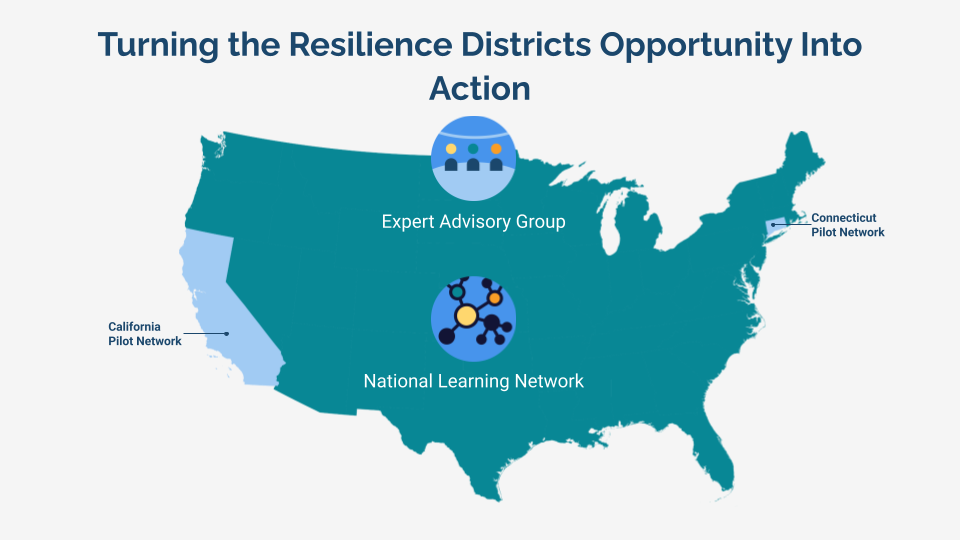
Figure A. The Resilience District Incubator Program Structure

About the Incubator

The Incubator gives communities a structured way to test whether a Resilience District could work for them. It supports that process through:

  • One-on-one technical assistance from early exploration through district development.
  • A learning network connecting communities to share strategies, challenges, and solutions.
  • Expert support on public and private finance, risk modeling, governance, and community development.
  • Practical tools and templates that support feasibility analysis, district development, and cross-sector partnerships.

The process produces an investment and implementation roadmap that communities can use to decide whether and how to advance a Resilience District or another approach.

What are Resilience Districts?

Authorized by California’s Senate Bill 852 (Dodd, 2022), Resilience Districts enable cities, counties, and special districts to fund projects that reduce local climate risks and support the operations, maintenance, and administrative functions needed to sustain those investments over time. Resilience Districts are modeled after Enhanced Infrastructure Financing Districts, a widely used mechanism for funding large-scale community infrastructure projects across the state.

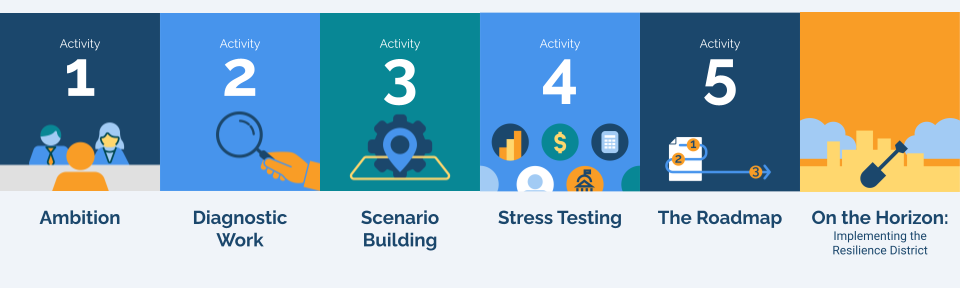
Figure B. The Resilience District Incubator Learning Pathway

Current Cohort

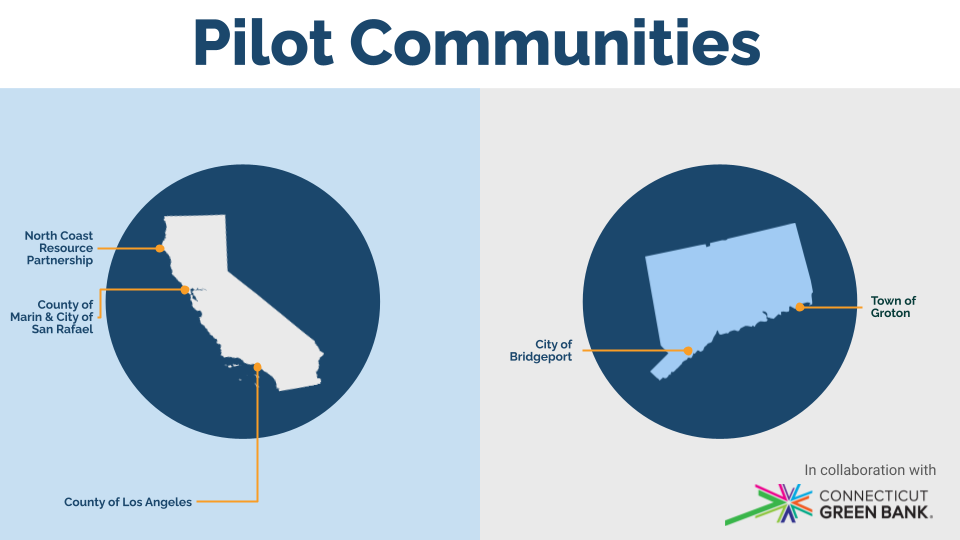
The Incubator is supporting its first cohort of communities in California and Connecticut through district design and pre-development. The 2026 California cohort includes: 

  • The City of San Rafael and County of Marin 
  • The County of Los Angeles 
  • North Coast Resource Partnership 

The Incubator is also learning alongside the Town of Groton and City of Bridgeport in Connecticut.   

In addition, CA FWD is working in partnership with the Southern California Association of Governments to share the Incubator’s Learning Pathway with governments across Southern California, supporting their members’ efforts to leverage resilience districts to plan and advance investments in infrastructure, housing, transportation, economic development, and climate resilience. 

Figure C. The Resilience District Incubator’s 2026 Pilot Community Cohort

The latest Resilience District Incubator
news from CA FWD:

Climate Resilience Districts: A Powerful Tool Waiting for California
1024 634 CA FWD

CA FWD, in partnership with Resilient Cities Catalyst, are turning Climate Resilience Districts from statute into practice through the Resilience District Incubator project.

Interested in learning more?

If you’d like to learn how Resilience Districts could work in your region, we welcome the opportunity to connect.