
FISCAL RESILIENCE IN A CHANGING CLIMATE

Without proactive action to reduce risk and build resilience, the public sector will continue to face mounting costs from climate-driven natural disasters that limit resources for infrastructure, social services, workforce development, and economic opportunity.
CA FWD is committed to meeting this moment by advancing bold, practical solutions through an approach that considers all climate risks and that strengthens fiscal health, drives investments in climate adaptation, and aligns economic incentives to improve insurability.

CA FWD’s Fiscal Resilience portfolio is designed to unlock sustained investment in climate risk reduction, pilot scalable solutions, and align public and private incentives to drive long-term resilience. This program convenes across sectors for shared learning and action, connects regional stakeholders to advance structural reform, and catalyzes investment in climate risk reduction. The program portfolio includes the following suite of activities and initiatives:

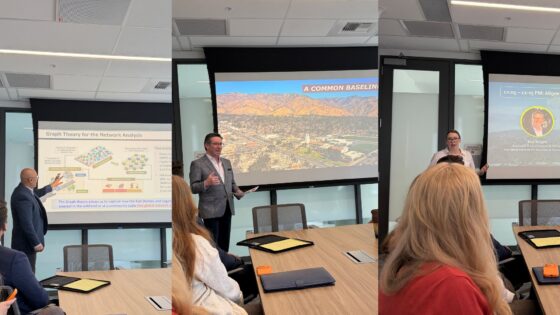
Resilient Design Sprints: The series brings together experts across sectors to tackle the fiscal risks that governments face due to climate impacts. Two Sprints have been held to date. The first Sprint in fall 2024 identified market gaps, the consequences of inaction, and sustainable strategies to reduce community exposure to climate risk, and the second in spring 2025 examined the current state of risk modeling and insurance practices, persistent gaps in how local adaptation measures are accounted for in risk assessments, and emerging methodologies for quantifying benefits to ensure risk-reduction benefits are better reflected in insurance outcomes.

The Resilience District Incubator: The Resilience District Incubator, developed by CA FWD and Resilient Cities Catalyst, provides hands-on support, a national learning network, and practical toolkits to guide communities through the exploration and implementation of Resilience Districts, or similar models for securing long-term, community-driven investment in resilience.

The Community Wildfire Resilience Workgroup : The Community Wildfire Resilience Workgroup convened by CA FWD brings together leaders across wildfire science, land use, insurance, finance, and community implementation to align around a practical, practitioner-informed policy agenda to reduce wildfire risk in communities, markets, and public budgets statewide. Building on the report Preparing for Wildfire by Protecting What Matters and the Wildfire Policy Forum, the workgroup is advancing solutions focused on finance, data and modeling, and a policy playbook to guide California’s next Governor, and serving as a resource to legislators and decision-makers as they shape policy and programmatic action.

Funding and Financing Strategy for Resilience: As climate-driven disasters grow more costly, governments face increasing pressure to fund resilience. The current approach is fragmented—hindered by inconsistent funding, misaligned incentives, and financial tools that undervalue risk reduction. To address this, CA FWD and Insurance for Good are convening a cross-sector working group to define sustainable funding and financing models, explore the role of insurance and rating systems in valuing resilience, and identify regulatory and policy solutions that improve economic signals and unlock investment. The initiative will culminate in a shared framework and recommendations to guide future action, including a set of state policy and financing recommendations for the next Governor and Insurance Commissioner.

Public Budget Resilience: CA FWD is advancing policy reforms to the state’s Rainy Day Fund, including increasing savings during strong revenue years and smoothing budget fluctuations during shortfalls. California’s budget is among the most volatile in the nation, which is inherently a climate resilience issue — the more volatile our budget the more unpredictable our investment in climate resilience. Reforming the Rainy Day fund is an important first step and a prerequisite to ensuring the state has a resilient economy, one where we can sustain investments in climate adaptation and resilience, especially in communities most vulnerable to climate impacts.

The California Resilience Implementation Accelerator: CA FWD, in partnership with Resilient Cities Catalyst and Climate Resolve, is advancing high impact, multi-benefit resilience projects and supporting local nonprofit and government partners with resources, technical assistance, global best practices, and collaborative knowledge exchange through the California Resilience Implementation Accelerator. 

The latest Fiscal Resilience news from CA FWD:

Funding Climate Resilience: Trust, Enabling Conditions, and the Questions That Remain
1024 557 CA FWD

This is the fifth installment in a blog series from CA FWD and Insurance for Good, our partner in developing an actionable guidebook that outlines replicable funding and financing strategies for risk reduction and resilience.

Why Resilience Finance Starts with Predevelopment
1024 768 CA FWD

In some ways, the business case for resilience looks more like preventative healthcare or early childhood education than traditional capital planning or infrastructure finance—early action creates the greatest value.

California Can’t Afford to Wait: The Fiscal Case for Sustained Resilience Investment
1024 683 CA FWD

California has an opportunity to advance a more strategic and durable approach to resilience.

Resilience at Scale Means the Municipal Bond Market
1024 683 CA FWD

By engaging local economic actors as co-beneficiaries, and co-investors, governments can move from isolated public spending to shared solutions.