
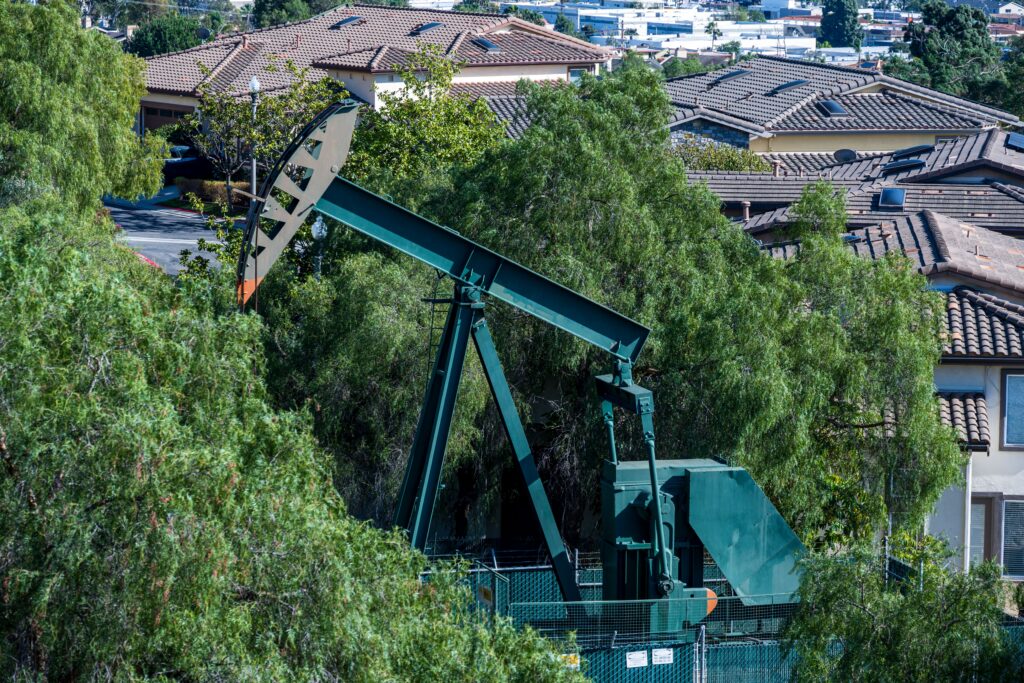
Photo Credit: shutterstock.com/Michelangelo DeSantis
By Jake Higdon
In recent years, there has been increased national attention on the problem of orphaned and abandoned oil and gas wells, which are estimated to number in the hundreds of thousands across the U.S. These wells are a natural focus for policymakers—no one really “owns” them once the oil is depleted, leaving them squarely on the taxpayers’ dime, leaking methane and scarring the landscape. It is a classic example of an indirect cost imposed on the public, and one that policymakers on both sides of the aisle want to solve. In 2021, as part of the Infrastructure Investment and Jobs Act, Congress passed a $4.7 billion federal program to plug these wells, generating a win for the environment and creating jobs for oil and gas workers with the skillsets to remediate them.
Considerably less attention has been paid to a different category of oil and gas wells called marginal wells. Yet, these wells represent a much larger share of the methane emissions challenge. Non-profit Rocky Mountain Institute (RMI) estimates that there are 576,000 marginal oil and gas wells across the U.S., and 18,000 in California. Marginal wells are those that are still producing—and, typically, still have an owner—but are no longer operating at peak productive capacity. Seventy percent of wells in the U.S. are marginal, low-producing wells; they generate only 7% of U.S. oil and gas, but roughly half of the methane pollution. These wells, and associated aging pipelines and tank batteries, are leaking methane (and other dangerous, toxic pollution) not just in the major oil and gas producing regions of the U.S., like the Permian basin, but also in less obvious but more populated places, like Los Angeles County. Long Beach is home to roughly 750 active wells, according to CalGEM data, and Inglewood, home of the L.A. Clippers and a major proposed site for the 2028 Olympic Games, hosts more than 300 marginal wells.
As far as climate action goes, plugging marginal wells seems like remarkably low-hanging fruit. The average marginal well in the U.S. emits 1,000 tons of CO2-equivalent greenhouse gases per year, though methane’s warming impacts are front-loaded, contributing to more rapid warming in the near-term. According to Reid Calhoon, the founder and CEO of ClimateWells, a company that implements well-plugging projects, the typical cost to plug a single marginal well ranges from $30,000 to $100,000. Even using the high-end estimate, we could plug every marginal well in California by 2035 for less than $2 billion, cumulatively, at a very efficient $10/ton of avoided emissions. That’s a lot of money, but it is a similar order of magnitude to other climate efforts being spearheaded within the state; for instance, the Frontier carbon removal effort, founded by Bay Area tech companies, committed $454 million to carbon removal from 2022-2024.
Apart from climate action, there are many reasons to consider plugging marginal oil wells. Consider local air and water pollution: Plugging wells addresses air toxins and volatile organic compounds and simply gets old, rusting rigs out of folks’ backyards. There’s also the matter of jobs: Old wells aren’t providing much in the way of employment or tax revenue or oil supply, and we can put people to work plugging them.
Finally, accelerating the timeline for plugging these wells can allow the land to be converted to new, beneficial uses. California has a significant opportunity to redevelop old oil and gas parcels for advanced industries, green space, or even infill housing, as exemplified by remediation and reuse projects along the Huntington Beach waterfront and wetlands in Long Beach. For a state with land and housing constraints, ambitious environmental goals, and a desire to compete in the clean industries of the future, expediting the end-of-life process for marginal oil wells reclaims swaths of property that can better serve California families, support local economies, and restore the environment. In certain cases, it may also be possible to simply convert wells directly to new uses, like energy storage.
You might ask: Why aren’t these wells getting plugged or converted right now? Well, unlike orphaned wells, marginal wells have owners and they are still, technically, producing. All incentives point towards keeping them operating to the very end, or simply selling them off to the next available bidder. But that doesn’t mean that operators aren’t willing to close them down. In 2024, Climate Wells put this theory to the test in the Wilmington neighborhood of Los Angeles, where it partnered with an operator to shut down seven marginal wells located near a youth baseball facility. The effort generated 6,000 carbon credits for JPMorgan Chase and demonstrated the willingness of these owners to decommission wells early if the incentives are realigned.
Private companies with climate pledges, philanthropists, and states like California want clear climate wins. Marginal wells represent one of the simplest and most direct pathways to slashing emissions, with virtually no downside in terms of jobs or energy supply. It’s time to tackle this invisible pollution in our backyards.